
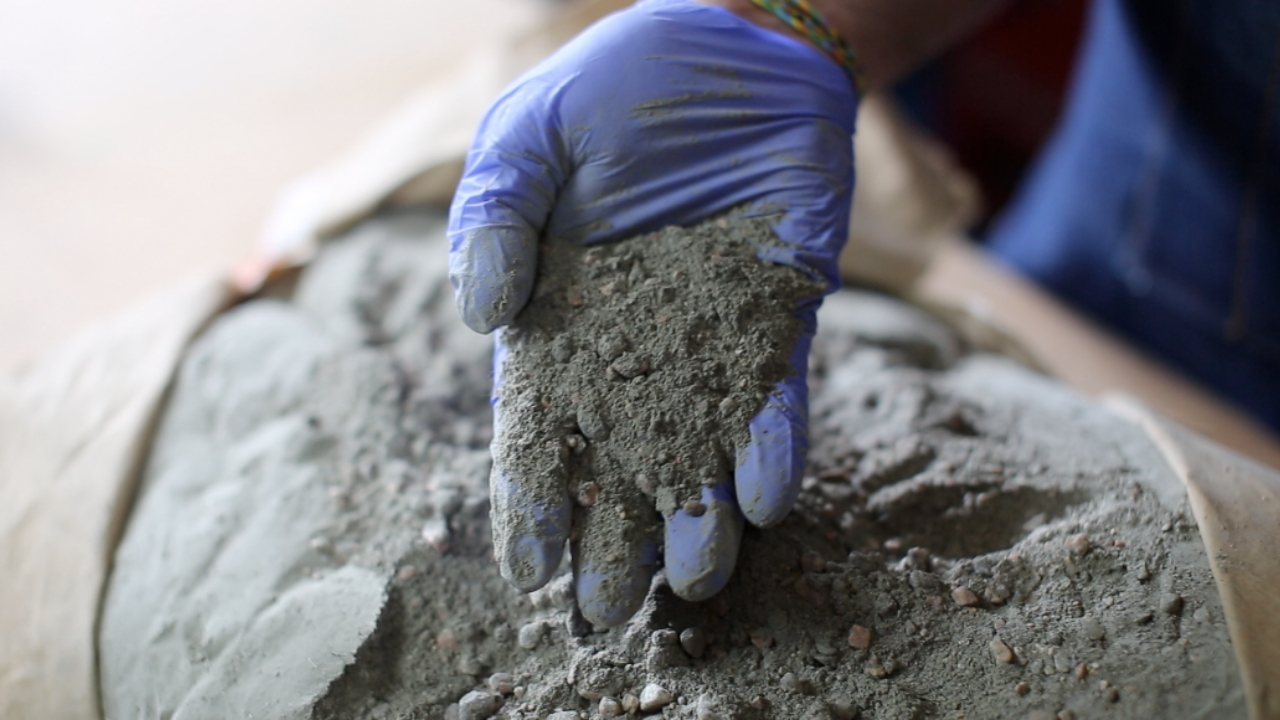
The transition to portland-limestone cement, commonly designated Type IL, has changed concrete production across much of North America.
For many projects, the change may appear relatively simple: one cement designation replaces another on the batch ticket.
In practice, changing the cement changes part of the concrete system.
As producers, contractors, engineers, and testing laboratories have gained experience with Type IL cements, the industry has continued evaluating differences in fresh concrete behavior, admixture interactions, air systems, setting characteristics, finishing, strength development, and durability performance.
These experiences are not identical everywhere. Type IL cements are not all identical, and neither are the concrete mixtures in which they are used.
But the transition has reinforced an important principle:
When one major component of a concrete mixture changes, the entire system may need to be reevaluated.
Colloidal silica is increasingly being considered as one tool within that evaluation.
The important question is not whether colloidal silica can simply “fix” Type IL concrete.
The better question is:
Can a properly selected colloidal silica help a specific Type IL concrete system achieve the performance required for a particular application?
What Changed With Type IL Cement?
Portland-limestone cement incorporates a greater amount of finely ground limestone than traditional portland cement.
Its increased use is part of the concrete industry's effort to reduce the carbon intensity associated with cement and concrete production.
But cement is not simply an interchangeable binder.
Its physical and chemical characteristics influence hydration, water demand, admixture response, setting, strength development, and other properties of concrete.
Changing cement can therefore change how the entire mixture behaves.
That does not mean Type IL cement is inherently problematic.
It means that a concrete mixture developed and optimized around one cement should not automatically be expected to behave identically when the cement changes.
Why Can Fresh Concrete Behave Differently?
Concrete producers and contractors work with the material long before laboratory cylinders reach their specified testing age.
They see concrete at the plant, in the truck, through the pump, behind the screed, and under the finishing equipment.
Changes in cement characteristics can influence properties such as:
· Water demand and rheology
· Bleeding
· Mixture cohesiveness
· Slump and slump retention
· Air entrainment and air stability
· Admixture demand and response
· Setting characteristics
· Pumpability
· Finishing behavior
The magnitude and even direction of these changes can vary considerably depending on the cement source, supplementary cementitious materials, chemical admixtures, aggregates, mixture proportions, temperature, and production conditions.
That variability is exactly why broad statements about Type IL performance should be approached carefully.
The concrete system has to be evaluated as a system.
Where Can Colloidal Silica Fit?
Colloidal silica consists of extremely small, dispersed amorphous silica particles with high surface area.
Those characteristics allow colloidal silica to interact with a cementitious system in ways that may influence fresh concrete behavior, hydration, microstructure development, and transport properties.
In Type IL mixtures, colloidal silica may be evaluated for objectives such as:
· Modifying mixture rheology and cohesiveness
· Reducing excessive bleeding
· Improving mixture stability
· Supporting desired early-age performance
· Influencing permeability and transport characteristics
· Supporting specific durability objectives
But these outcomes should not be assumed.
The effect of colloidal silica depends on the particular product, dosage, cement, supplementary cementitious materials, chemical admixtures, water-cementitious materials ratio, production procedures, and other mixture variables.
That makes laboratory evaluation and field validation essential.
Colloidal Silica Isn't a Band-Aid for a Bad Mix
When concrete behavior changes, the temptation can be to add another material and hope the problem disappears.
That is not sound mixture development.
If an air-entraining admixture is incompatible with the cementitious system, that issue needs to be understood.
If excessive water is being added in the field, colloidal silica does not eliminate the consequences.
If finishing practices are poorly matched to the concrete's bleeding and setting characteristics, adding another ingredient does not replace proper field practices.
If curing is inadequate, a more sophisticated mixture does not make curing unnecessary.
Colloidal silica should be incorporated because it serves a defined purpose within an intentionally designed concrete system.
It should not be used to hide a problem that has never been properly identified.
Compatibility Becomes Even More Important
Modern concrete mixtures are complex.
A Type IL mixture may contain cement, fly ash, slag cement, silica fume, multiple chemical admixtures, fibers, and other specialty materials.
Adding colloidal silica introduces another component into that system.
The interaction among these materials can affect air content, slump retention, rheology, setting, bleeding, strength development, and other properties.
Compatibility testing should therefore represent the actual combination of materials intended for production whenever possible.
This becomes particularly important when a producer changes cement source or introduces a new Type IL cement into an existing mixture.
A dosage or admixture combination that worked with the previous cement may require reevaluation.
Don't Chase the Old Mix. Design the New One.
One of the most useful ways to approach the transition to Type IL cement may be to stop asking:
“How do we make this behave exactly like our old mix?”
Instead, ask:
“What does this concrete need to do?”
If the mixture must pump successfully, define the required fresh properties.
If bleeding is creating problems, evaluate and measure bleeding.
If air stability is critical, evaluate the air system.
If freeze-thaw durability matters, test freeze-thaw performance.
If chloride exposure is the concern, evaluate the transport properties relevant to that exposure.
If finishing behavior is creating problems, conduct controlled field trials under realistic placement conditions.
The objective should not necessarily be to recreate yesterday's concrete with today's materials.
The objective should be to design today's materials to deliver the performance the project requires.
Test What You're Trying to Improve
Compressive strength remains an important concrete property, but a 28-day cylinder cannot answer every question about concrete performance.
If colloidal silica is being evaluated to address a particular Type IL challenge, the testing program should evaluate that challenge.
A useful evaluation may include fresh and hardened properties such as:
· Bleeding
· Slump and slump retention
· Air content and air stability
· Setting characteristics
· Rheological behavior
· Strength development
· Permeability or transport properties
· Freeze-thaw resistance
· Scaling resistance
· Other project-specific performance requirements
Field observations matter as well.
Concrete ultimately has to be produced, transported, pumped or discharged, placed, consolidated, finished, cured, and put into service.
A laboratory result is valuable.
A concrete system that performs consistently from the laboratory through construction is better.
The Type IL Transition Is an Opportunity to Learn
Changes in cement technology create challenges, but they also create an opportunity to improve how the industry approaches concrete mixture development.
Instead of relying on historical recipes, concrete can be evaluated around measurable performance.
Instead of assuming admixtures and cementitious materials will interact the same way they always have, compatibility can be tested.
Instead of relying solely on compressive strength, durability testing can reflect the environment in which the concrete will actually serve.
And instead of viewing colloidal silica as a universal solution, it can be evaluated as one potential tool within a complete concrete system.
The Takeaway
The transition to Type IL cement is not simply a cement substitution.
It is a change to the concrete system.
Colloidal silica may provide producers, contractors, and engineers with another tool for managing that system, but successful implementation requires understanding the materials, defining the performance objective, evaluating compatibility, and validating results through testing.
The question should not be whether colloidal silica “fixes” Type IL concrete.
The better question is:
Can a properly selected colloidal silica help this specific Type IL concrete system achieve the performance this project requires?
That is a question that can be answered with thoughtful mixture development, appropriate testing, and real-world validation.